

Bridging The Bargaining Gap

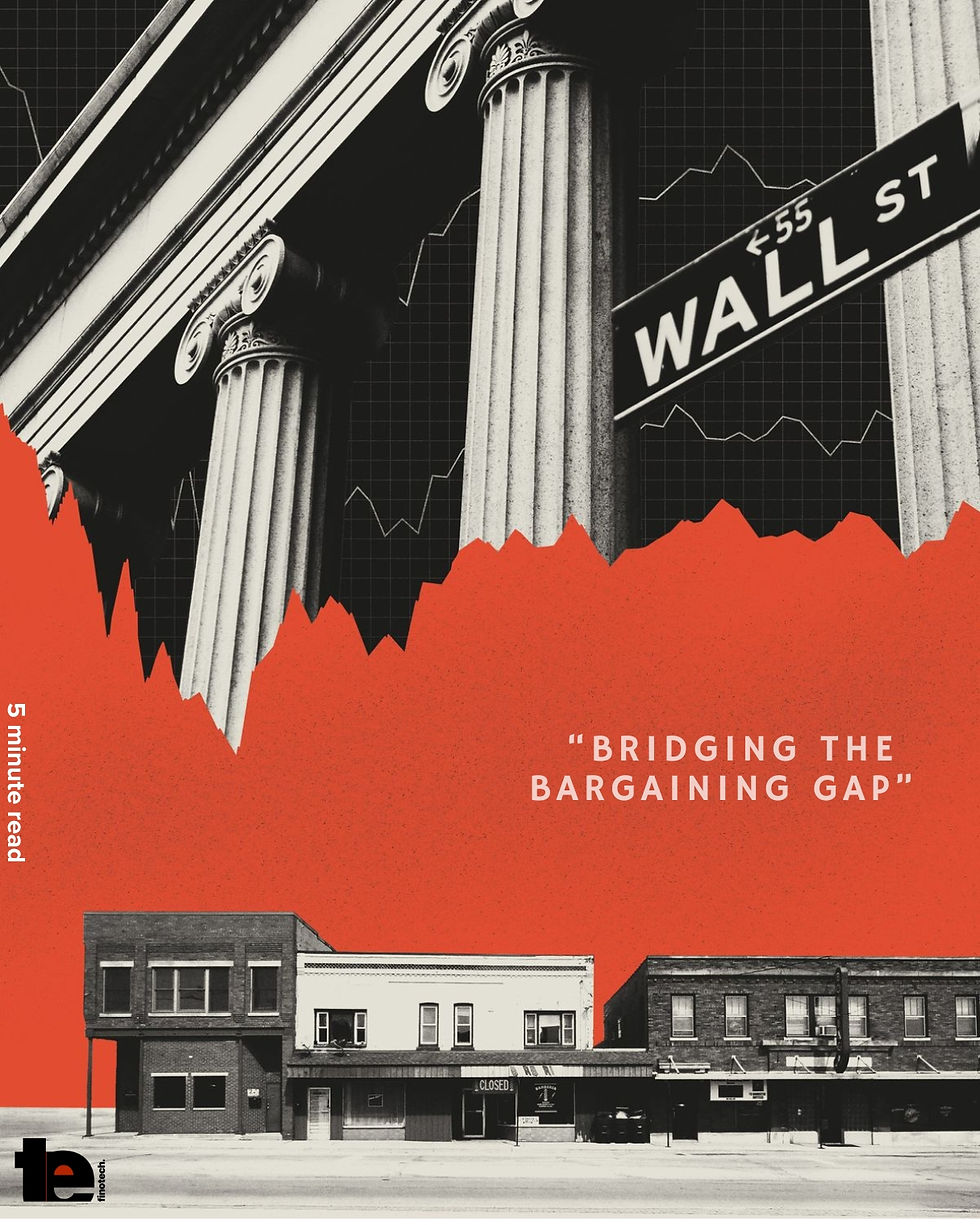
For a person, a vacation can mean two things: a good holiday where you get to bond with your family or in my unique case, it can open your eyes to market inequality that has indirectly affected startups adversely.
The market isn’t actually an equal playing field like many of us think it is. On the contrary, it is full of inequality and disparity, indirectly and unintentionally supporting large established businesses.
On my vacation, I happened to witness both sides of this unequal market. While walking through the Mall Road in Mussoorie, we stopped to buy some corn from a street vendor selling it on the road. The person ahead of us in line was bargaining for just ten rupees, and I thought to myself, “Was it worth it?” For the customer, a tourist travelling with a decent amount of money, probably coming from a middle-class background, did these ten rupees mean as much as they did to the poor vendor? Yet, they went on and on till he just gave in for the lack of any other option.
On the other hand, walking through a prominent mall, as I stopped at big shops owned by wealthy companies sitting on billions of dollars, I noticed a difference that enabled me to understand this disparity. No one in line would stop to bargain; the listed price was final. Whether you liked it or not, if you wanted the product, you had to pay the price.
This sparks the question: What factor actually differentiates these two experiences? The answer to this is quite simple, really. Bargaining power. These malls possess more bargaining power, allowing them to impose their price on us without question, while we have more bargaining power than the shopkeeper, aiding us in our negotiation. This unequal bargaining power has resulted in a world where MNCs pull the strings and dominate the market, while small shopkeepers are unable to find their place in this MNC-dominated market.
The inequality we witnessed, when it is seen at a larger scale, also hinders the growth of startups. The vendor-mall analogy can be directly compared with the startups-corporations analogy.
These two types of businesses also have a bargaining power gap. The large companies have brand dominance and pricing power while the startups lack the ability to dictate terms in a negotiation. These big businesses also have a lot of money to cushion them if they fail while the startups do not have that kind of financial security. Even brilliant ideas fail due to the ecosystem which innately favours these big businesses. The startups do not lack innovation, they just don’t have the right environment to thrive.
Now, I can go on and on about why this problem is bad, but I think we need to focus more on what can be done to reduce this gap and foster a more equal market.
If we truly want to bridge this gap, we need to understand that it cannot be brought out on a policy level; the change will only happen if everyone contributes to the difference at their own individual level.
We need to stop buying things just for the sake of convenience and, rather, must focus on buying things that can help us contribute to society. Supporting small businesses by buying locally and paying a fair price, even if it costs us a little more, can actually make a difference. We need to start teaching these values to children in schools themselves so that they can be instilled into their character. We need to tell the next generations about today’s problems and encourage them to develop financial empathy and ethical consumerism. We need to learn to value other people’s labour.
In conclusion, the next time you bargain for just a few rupees, just pause and think about the value of those rupees for the person on the other side. While markets can never truly be equal, this awareness can be a good step towards making them fairer.
For me, that vacation was more than just a simple holiday. It reminded me of the fact that inequality lies everywhere. In some places, it is very visible and everyone knows about it, while at times, it hides in smaller things like the vendors on the side of the road. We need to learn to recognise these inequalities and try to contribute towards changing them instead of just ignoring them as something insignificant. Recognising inequality is just the first step; choosing to act against it is what truly makes a difference.
Written by :-
Samar Pratap Singh
From The Doon School

Comments